

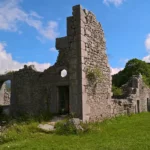
Montbel Castle
March 19, 2026
Saint-Pierre-d’Entremont
March 19, 2026Infernet Tower
A historic landmark in Saint-Pierre-d’Entremont
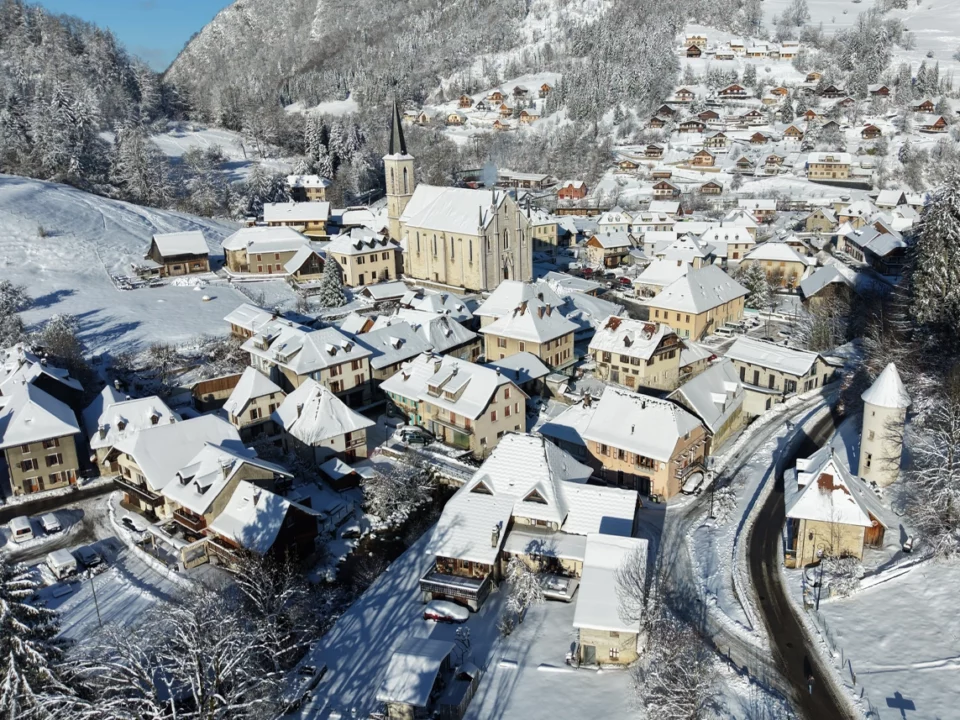
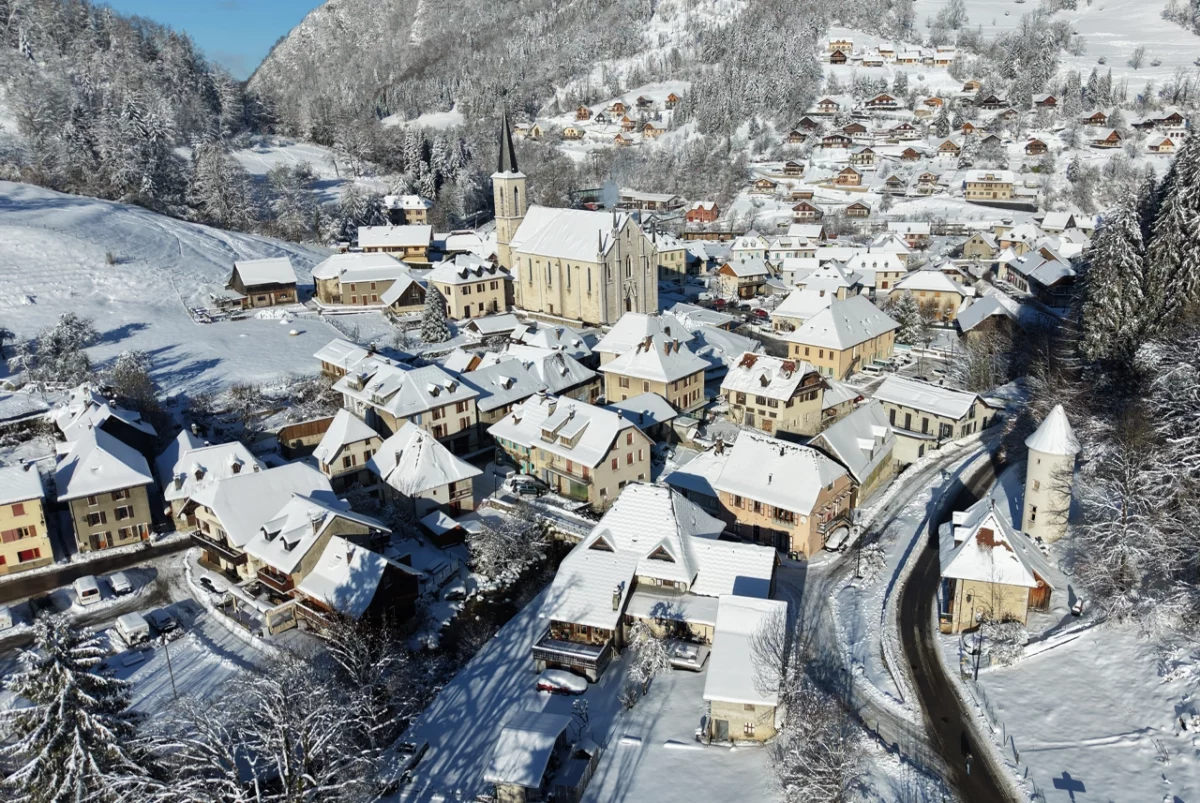
Located in the heart of Saint-Pierre-d’Entremont, Infernet Tower is one of the last visible remains of the village’s medieval history. Discreet yet instantly recognisable, it reflects the strategic role this valley once played along a major historical border between Dauphiné and the Duchy of Savoy.
Early 16th century
A borderland territory
In the late Middle Ages, Saint-Pierre-d’Entremont stood within a sensitive border zone. The Guiers river marked the boundary between two distinct entities: the Dauphiné, part of the Kingdom of France, and the Duchy of Savoy, an independent state until the 16th century. This position gave the village particular importance, both for controlling movement and for facilitating trade and human exchanges.
Infernet Tower must be understood within this context. It is the remains of a fortified house, likely built at the end of the 15th century, at a time when defensive architecture was evolving to adapt to the growing use of firearms. Rather than a monumental castle, it was a local seigneurial residence, designed to assert authority and monitor a key route through the valley.

A functional and defensive architecture
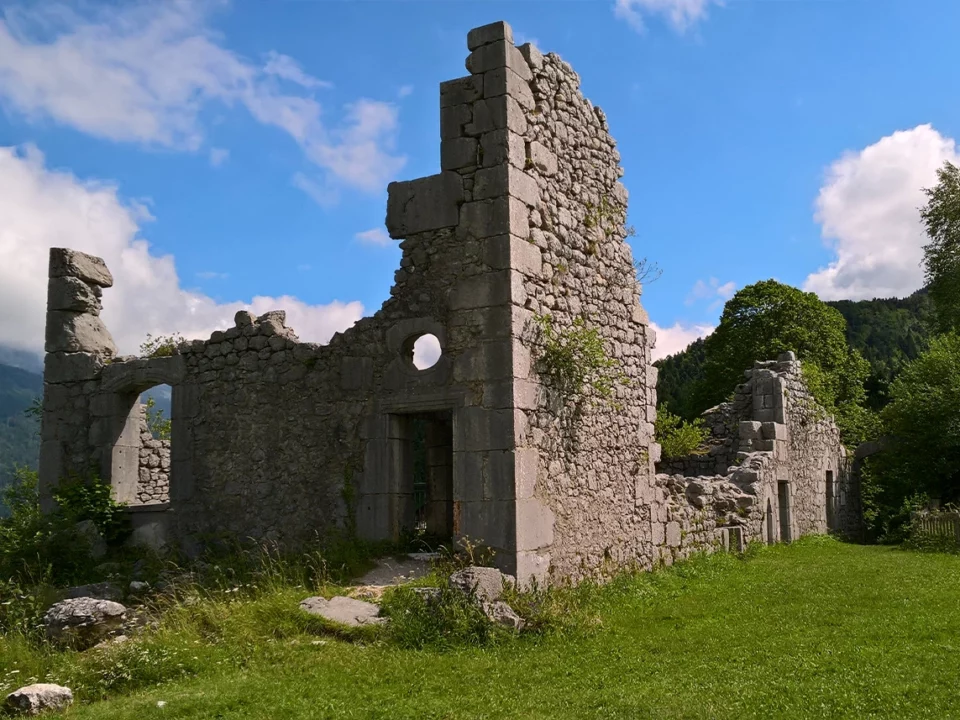
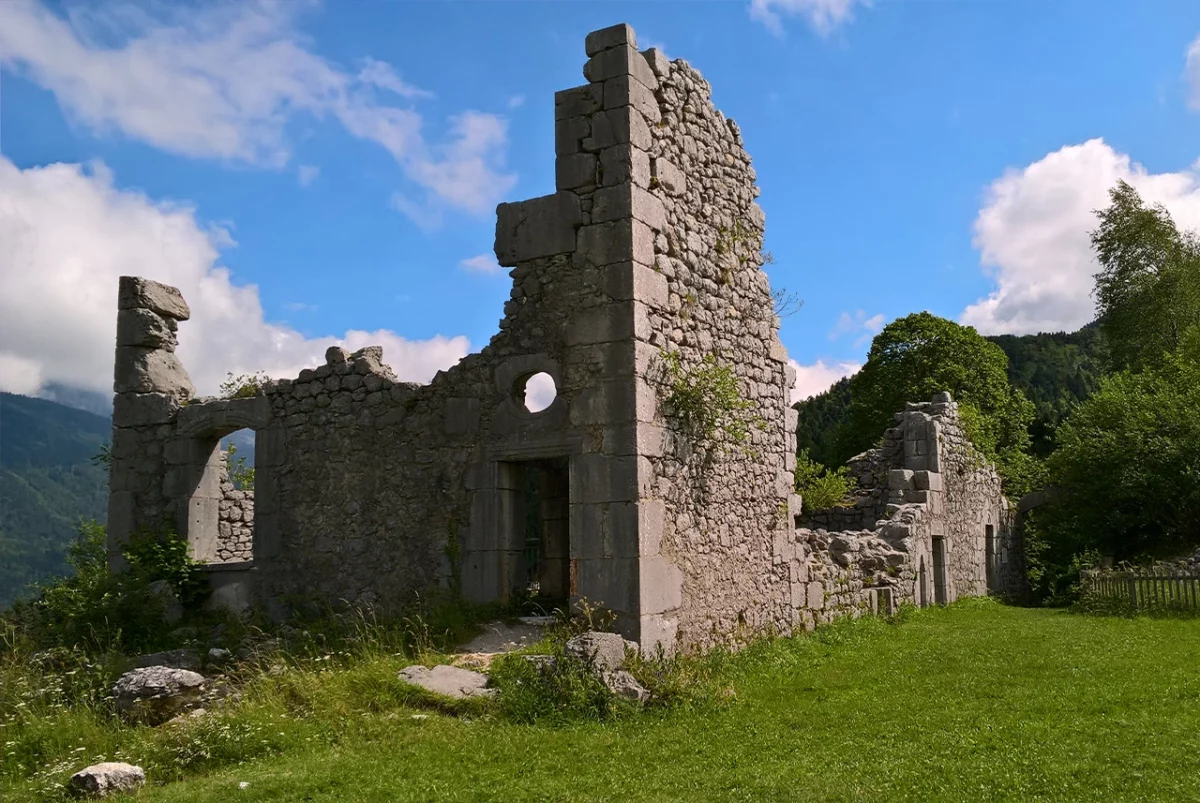
Built from local stone, the tower features a solid structure with thick walls, characteristic of fortified houses of this period. The narrow openings visible on the building were most likely gunports, designed for early handheld firearms. These allowed both observation and defence, while limiting exposure for those inside.
The simplicity of the structure reflects a primarily functional architecture, adapted to the terrain, climate and surveillance needs. The tower was once part of a larger complex, now lost, forming a modest yet strategic seigneurial residence.
Fire, restoration and the current roof
At the beginning of the 21st century, Infernet Tower was severely damaged by a fire that destroyed its timber structure and roof. This event highlighted both the vulnerability of the building and its heritage value. A restoration project was undertaken to preserve the stone structure and ensure its long-term protection.
Today, the tower is topped with a reconstructed roof, replacing the one lost in the fire. This intervention restored the original volume of the building while maintaining its simple and authentic character.
A landmark in the landscape and local memory
Today, Infernet Tower no longer serves a defensive purpose. It remains, however, a strong landmark within the village landscape, reflecting the border history of Saint-Pierre-d’Entremont. Visible from the village centre and along the Guiers river, it embodies a quiet memory: that of a territory long shaped by political boundaries, controlled passages and shifting balances of power.
More than a spectacular monument, Infernet Tower is a valuable witness to local organisation at the end of the Middle Ages. It tells the story of a time when the mountains were not just a backdrop, but a strategic, inhabited and closely monitored space at the heart of Chartreuse.